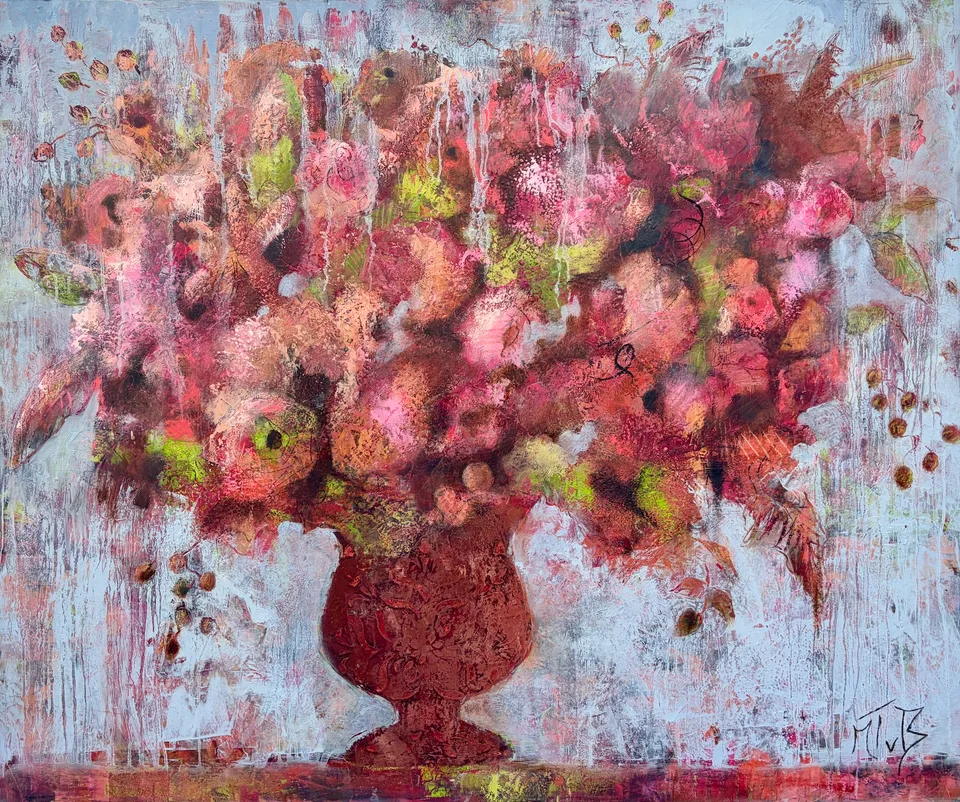
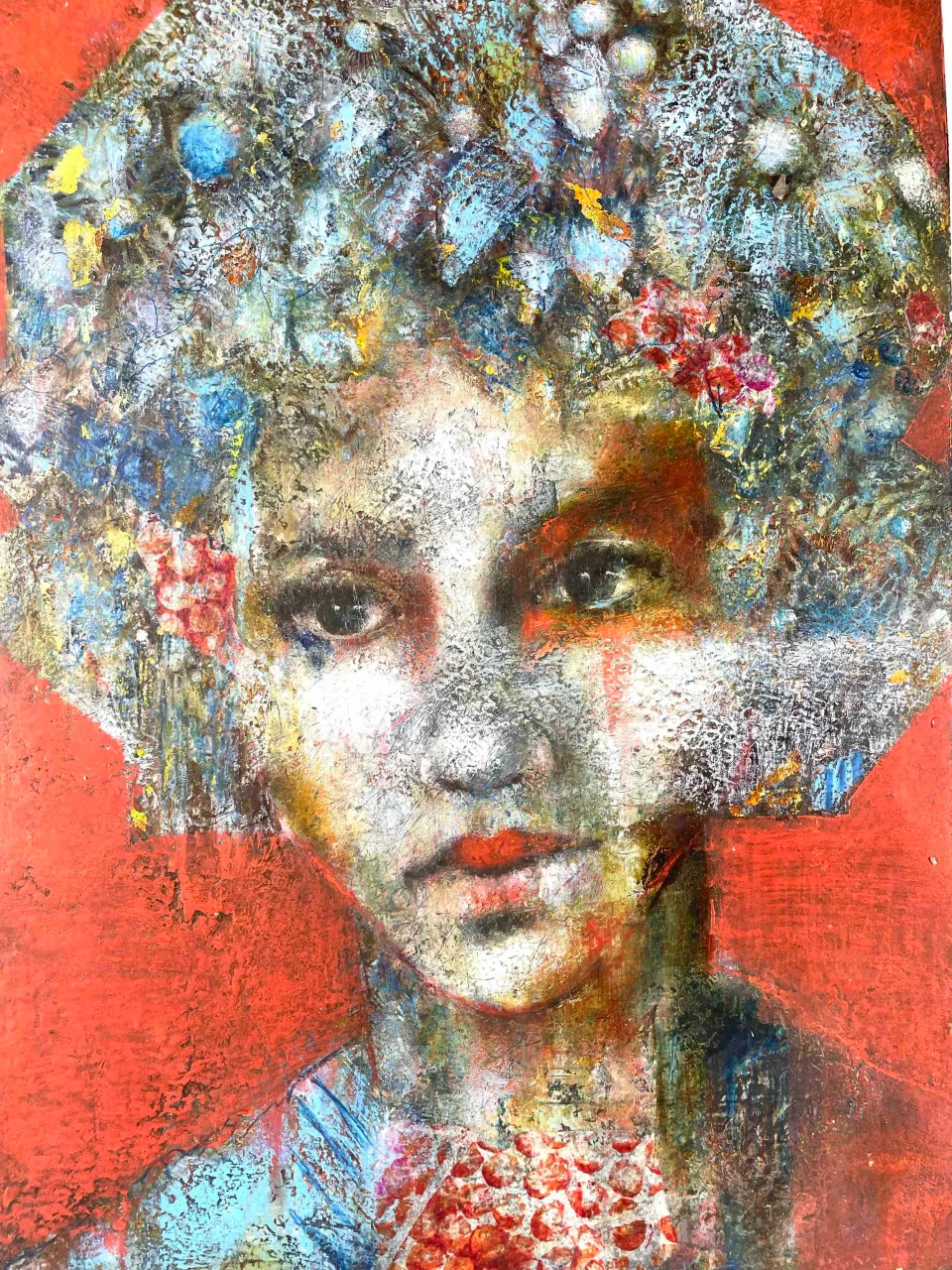
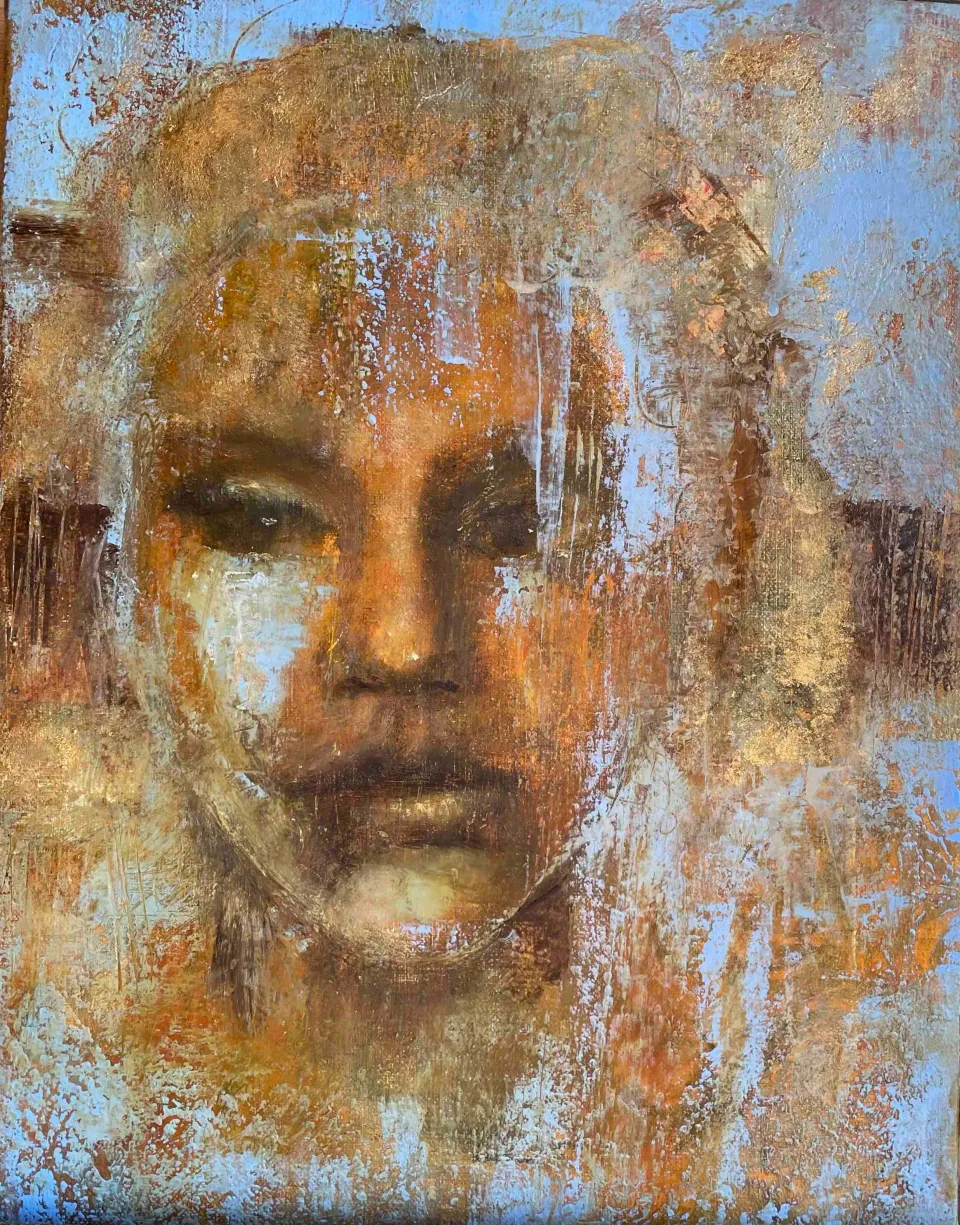
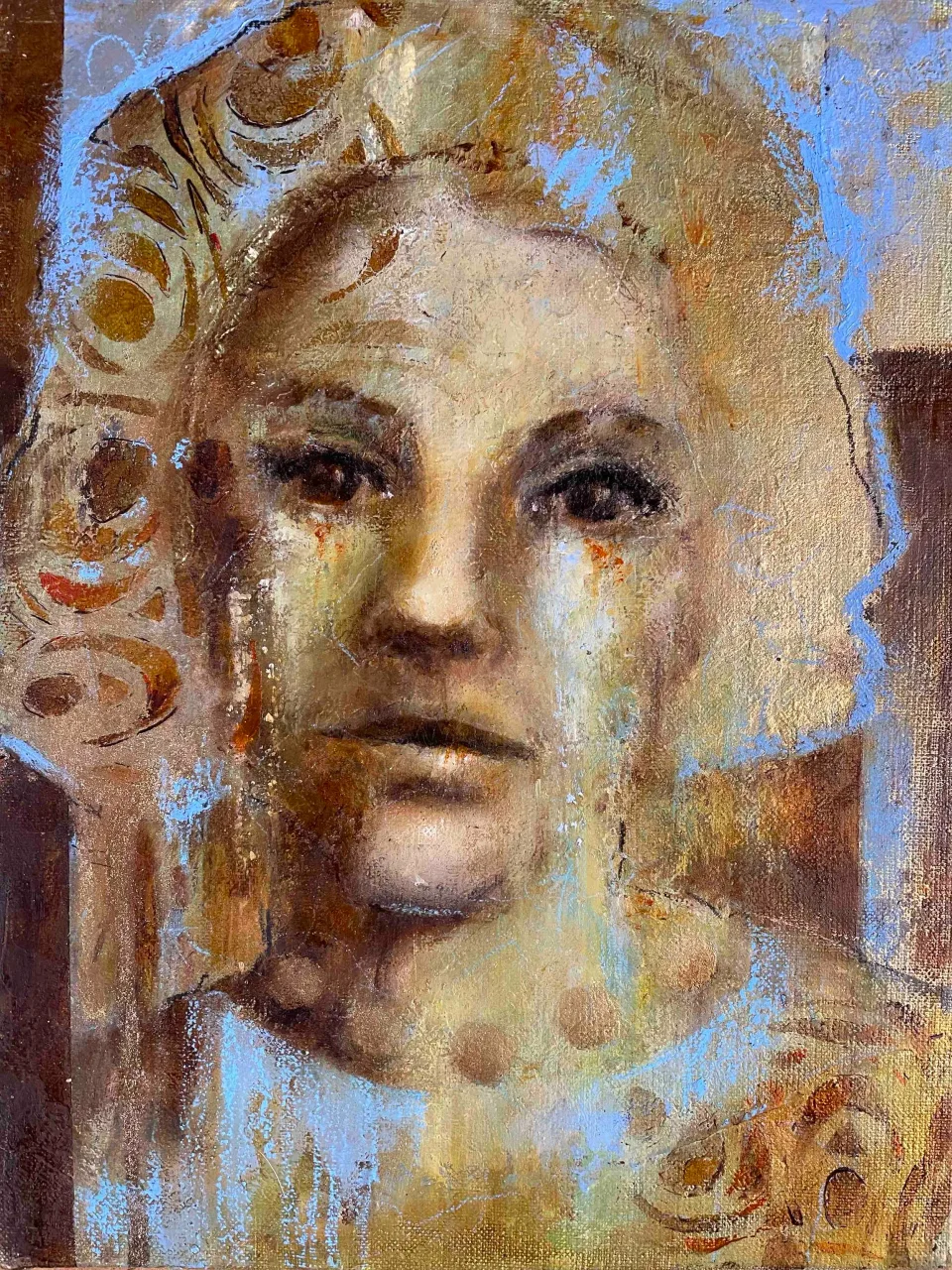
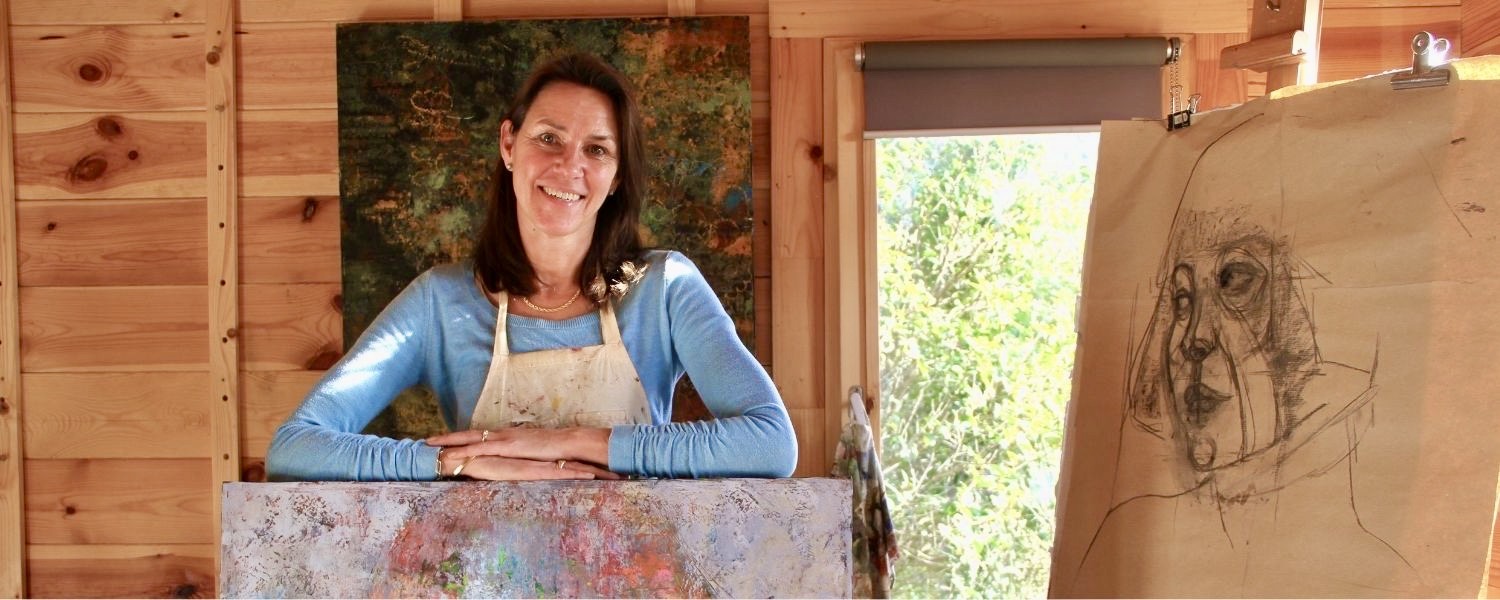
If you've seen a few of my paintings, you probably know that I love a bit of shimmer. Gold, bronze, copper… it doesn't have to be a lot, but I find it difficult to resist!
Sometimes it's just a little colour peeking through the background. Sometimes it's a few marks in a portrait or a small piece of gold leaf among the flowers. I don't always know where it will end up when I start a painting.
With December approaching, I decided to get my gold materials out and have a proper play with them. I made two sample backgrounds and tried different materials with acrylics and with oils and cold wax. These weren't meant to become finished paintings. The idea was simply to experiment, compare the materials and see what kind of effects they create.
There are quite a few ways to add gold to your work, and each material has its own character. Here are some of the ones I enjoy using.
PanPastel
PanPastel is a soft, dry pastel colour in a little pan. The gold and bronze shades are lovely for adding subtle metallic accents, either with a soft sponge or through a stencil.
What I particularly like is the softer effect. A mark made with PanPastel looks quite different from the same mark made with paint. And you don't always need to use the whole stencil. A little part of a pattern can be enough.
One thing I noticed in my tests is that covering the metallic pastel with a medium can soften the shine. It's always worth trying a finishing layer on a small sample first.
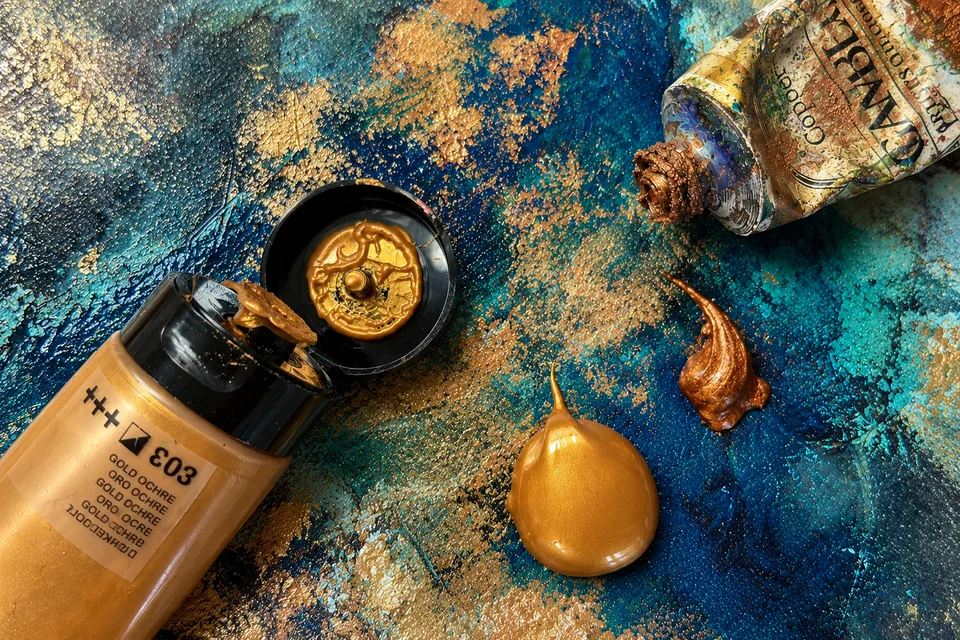
Metallic paint
Gold and bronze paints are an easy way to introduce metallic colour into your paintings. You can use acrylic or oil paint, depending on the materials you're working with.
Metallic acrylic paint is especially lovely in the first layers. I like having little bits of gold showing through as the painting develops. You know by now that starting on a completely white surface isn't really my thing!
Mixing metallic paint with gel medium or cold wax changes its appearance and reduces some of the shine. Sometimes that softer, more matt finish is exactly what you want. It just gives you a different effect from using the paint on its own.
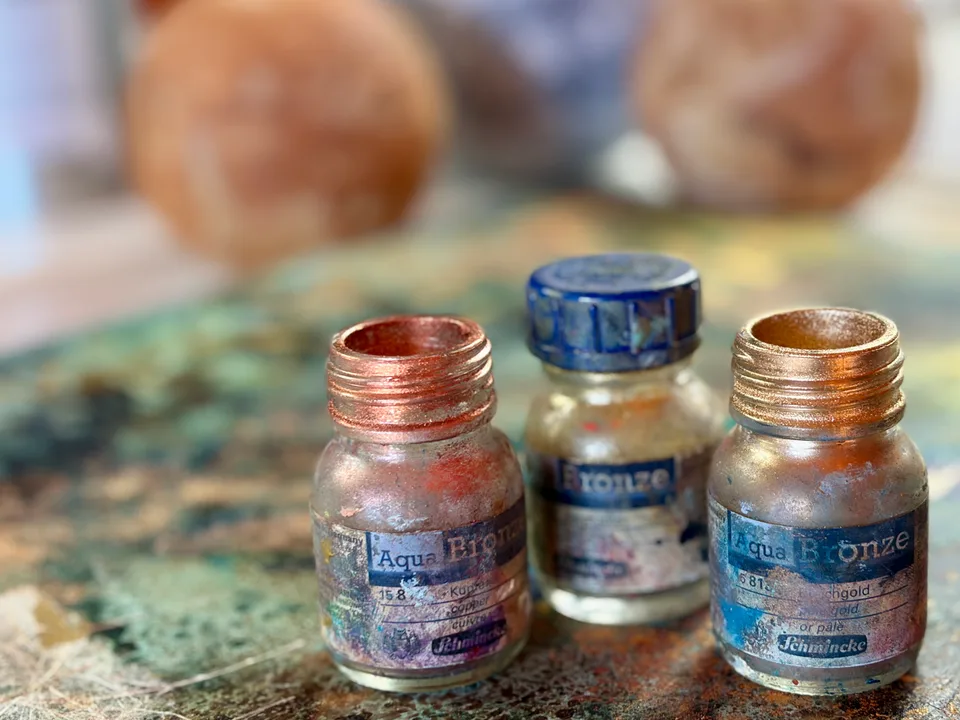
Aqua-Bronz
Aqua-Bronze is a fine metallic powder that is designed to be mixed with water. Once dry, it isn't waterproof. You can find more information about its intended use on the Schmincke website.
It's a lovely material to experiment with. You can mix it with water to make a metallic paint, or play with different amounts of water to change the opacity and effect.
In my experiments, I also added some to wet acrylic ink and then introduced a little more water. That was one of those moments when it's quite difficult to stop playing!
I've also tried the dry powder in my cold wax work. This is my own studio experimentation rather than the manufacturer's recommended water-based application, so test it on a sample first.
Gold alcohol ink
Metallic alcohol inks are fluid inks with shimmering pigments. They come in colours such as gold, silver and bronze, and are lovely for adding little accents and interesting effects.
I use Piñata and Kamenskaya inks. The gold I tested was darker than some of my other gold materials, and I find that metallic inks can look a little less shiny once dry. But I really enjoy the effects, especially when the colours meet and start to move across the surface.
You can also dilute them with 90% alcohol to let them spread and flow. Just remember that alcohol is highly flammable, so work in a well-ventilated space and keep it away from heat and flames.
Oil pastels and crayons
Metallic oil pastels are lovely for drawing directly into a painting. I particularly enjoy the creamy feel of my Sennelier oil pastel and the loose marks it creates. I also tried a Marabu Art Crayon, although I tend to reach for the Sennelier more often.
These materials aren't all the same, so it's worth knowing which one you're using. Oil pastels don't cure like oil paint, whereas oil sticks are made with drying oils and do dry. Marabu Art Crayons are water-soluble, which gives you another way to work with them.
Gilding paste
Gilding paste has a soft, wax-like consistency and is particularly lovely for highlighting raised areas of a textured painting.
You can apply a little with your finger, a cloth or a stiff brush, then gently buff it to bring out the shine. It also works beautifully along the edges of a panel. A small detail, but one that can make a painting feel a little more finished.
Because it's wax-based, I use it as a final accent on dry acrylic paintings, rather than applying more acrylic paint over it.
Gold collage paper
Gold collage paper adds both pattern and little touches of metallic colour. You can buy ready-made papers, but it's also easy to make your own.
For example, try using a stencil and metallic acrylic paint on thin rice paper. Once dry, tear the paper into smaller pieces and add them to your painting.
I prefer tearing rather than cutting because the irregular edges blend more softly into the layers. In my samples, the papers also behaved differently with cold wax and acrylic medium. It's interesting to see how the same material can give you quite different results depending on what you use it with.
Gold leaf
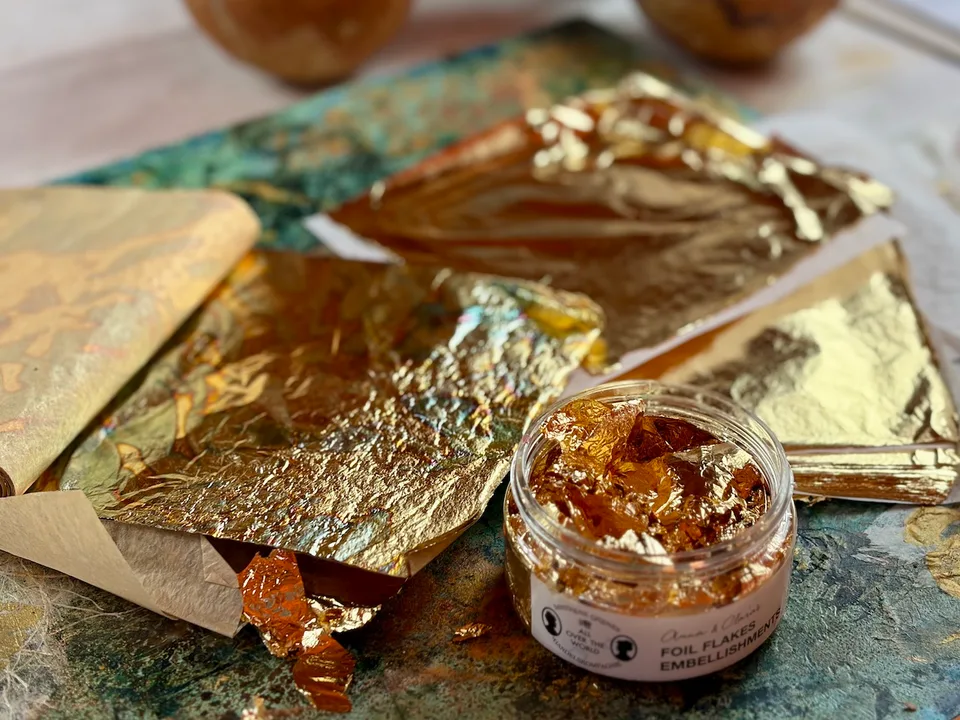
I use imitation gold leaf, which comes in sheets or flakes, rather than genuine gold. It gives a much more reflective finish than some of the softer metallic materials.
It's also incredibly thin and seems quite happy to stick to my fingers instead of the painting! I often break it into smaller pieces with my palette knife, so I can incorporate it into the flowers or the hair of a portrait rather than having one large shiny area.
One thing to keep in mind is that imitation gold leaf can tarnish over time. Ask your supplier about a suitable protective finish and always test it first, as a finishing coat can change the shine. My experience is mainly with oils and cold wax, and I'm still exploring the best way to use it in acrylic paintings.
You don't need all of them!
If I had to choose my current favourites, I'd say PanPastel, Aqua-Bronze and metallic inks. But ask me again in a few months and that might have changed!
Please don't see this as a shopping list. You don't need to buy lots of new materials to start experimenting. Try something you already have, make a few small samples and see which effects you enjoy. Sometimes the most interesting results come from simply combining materials and seeing what happens.
Want to explore more gold materials?
For the December edition of my Texture Lab, I've put together a full Gold Art Materials video where I test eight different materials with acrylics and oils and cold wax. There's also a downloadable Gold Materials Art Supply Guide, with an overview of the materials and ideas for using them.
Inside the Texture Lab, we explore different materials, techniques and ways of working through monthly projects and experiments. It's a place to try things out, discover new possibilities and have fun with your painting, without worrying about getting everything right.
If you'd like to explore more, you can find out about the Texture Lab here.
And now I'm curious: do you have a favourite way of adding gold to your paintings? I'd love to hear what you use!