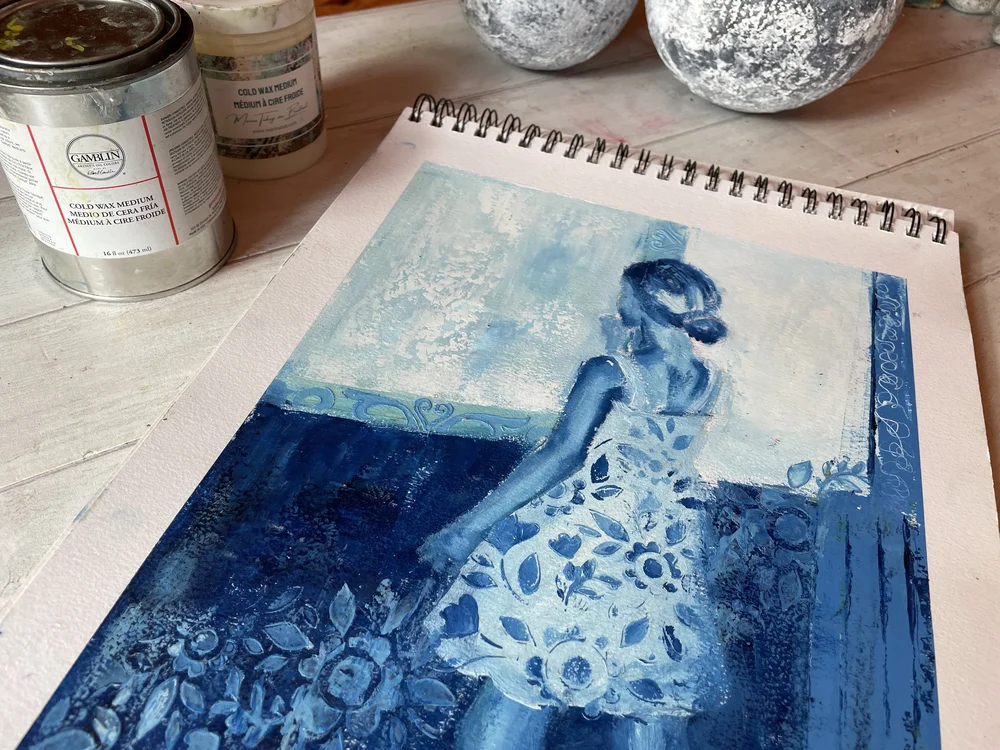
Dit is een van mijn favoriete oefeningen! Als je even geen inspiratie hebt of op zoek bent naar een leuke en ontspannen schildertechniek, probeer dan monochroom schilderen, waarbij je maar één kleur, zwart en wit gebruikt om een kunstwerk in je schetsboek te maken. Ik heb een kleine schildertutorial gemaakt over deze techniek, die je helpt om je begrip van licht en schaduw te verbeteren en tegelijk je proces te vereenvoudigen!
1. Wat is Monochroom Schilderen?
Bij monochroom schilderen gebruik je maar één kleur plus zwart en wit. Deze aanpak helpt je om je te focussen op waarden—de lichte en donkere tinten in je schilderij—zonder dat je je zorgen hoeft te maken over het mengen van kleuren.
2. Maak een Waardeschaal
Begin met het maken van een waardeschaal met de kleur die je hebt gekozen. Meng er zwart doorheen voor de donkerste tinten en wit voor lichtere waarden. Streef naar 4-5 waarden, dit helpt om diepte in je schilderij te creëren.
3. Schets je Onderwerp
Maak een lichte schets in je schetsboek. Maak je geen zorgen over de verhoudingen—het gaat om het schilderproces, niet om een perfecte tekening. Je kunt de schets zelfs overtrekken om tijd te besparen.
4. Zet de Kleur Neer
Ik gebruik cold wax en olieverf, maar deze tutorial kun je natuurlijk ook met olieverf of acrylverf doen! Ik gebruik een bowl scraper (of een grote kwast) om de kleuren neer te zetten. De scraper helpt om het schilderij losjes te houden en voorkomt fijne details.
5. Focus op Licht en Donker
Begin met je donkerste waarden en werk geleidelijk naar lichtere tinten toe. Let op hoe het licht op je onderwerp valt—ronde vormen bijvoorbeeld hebben op verschillende plekken verschillende waarden.
6. Gebruik een Zwart-Wit Referentie
Om de waarden beter te kunnen zien, raad ik aan om je referentiefoto in zwart-wit af te drukken. Dit maakt het makkelijker om de lichte en donkere gebieden van je onderwerp te vergelijken met de referentiefoto.
7. Ontspan en Experimenteer
Monochroom schilderen draait om eenvoud en ontspanning. Zonder de complexiteit van het mengen van kleuren kun je je volledig richten op het creëren van diepte en het experimenteren met texturen. Fouten horen bij het leerproces!
8. Voeg Textuur en Patronen Toe
Je kunt experimenteren met verschillende gereedschappen—zoals stempels, sjablonen, of zelfs bubbeltjesplastic—om je schilderij interessanter te maken. Dit geeft je werk meer dimensie en helpt om grote kleurvlakken op te breken.
9. Schetsboekoefeningen Zijn Leuk!
Schetsboekoefeningen moeten vrij van stress zijn en experimenteel. Maak je geen zorgen dat alles perfect moet zijn—geniet gewoon van het proces en leer terwijl je bezig bent.
Ik zeg altijd ‘Ontdek, Experimenteer en Speel’!
10. Probeer het Zelf!
Klaar om het zelf te proberen? Kies een kleur waar je van houdt, maak je waardeschaal, en ga aan de slag!
The Texture Lab
Als je graag experimenteert met textuur en mixed media, vind je The Texture Lab vast ook geweldig, mijn maandelijkse lidmaatschap. Het is een plek voor creatieve experimenten, lessen en inspiratie. De deuren zijn open — kom binnenkijken.
Als je deze tutorial leuk vond, like en reageer dan gerust, en abonneer je op mijn kanaal voor meer tips over cold wax schilderen. Welke kleur zou jij kiezen voor jouw monochrome schilderij? Laat het me weten in de comments!
Zoals altijd, aarzel niet om me vragen te stellen, ik hoor graag van je!💙